
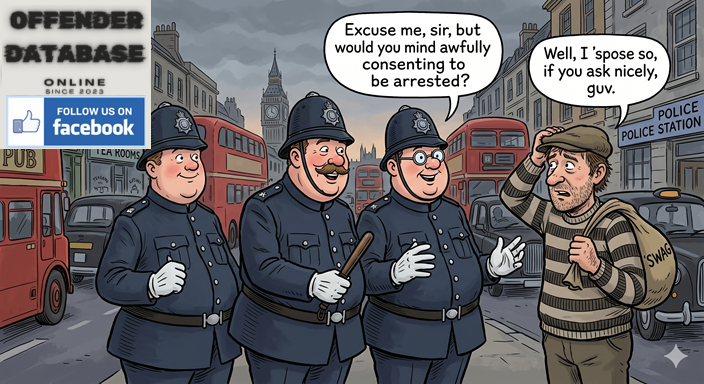
The British model of policing, famously established by Sir Robert Peel in 1829, is built on the principle of policing by consent. This philosophy dictates that the power of the police comes from public approval and cooperation rather than state-imposed force. However, as the digital age facilitates an explosion in child sexual exploitation, critics are increasingly asking if this 19th-century “soft” approach is equipped to stop modern child sex offenders from re-offending.
The Peel Principles vs. The Modern Predator
Peel’s core tenet—that “the police are the public and the public are the police”—relies on transparency and mutual trust. But child sex offenders operate in the shadows, often using the very freedoms afforded by a consensual society to hide their “behaviour.
- The Limitation of Power: Unlike “paramilitary” police forces in other nations, UK police rely on high legal thresholds for surveillance and intervention. Critics argue that this allows “clever, calculating criminals” to exploit the system, moving between jurisdictions or using encrypted apps like Telegram to continue their “behaviour” without detection.
- The “Friendly” Face of Policing: The emphasis on non-confrontational policing can sometimes result in a “culture of deference,” as seen in the IICSA report regarding the Church of England. When institutions and individuals are treated with a “presumption of virtue,” early warning signs of grooming are often missed or dismissed.
Human Rights and the “Right to Re-integration”
A significant challenge to stopping re-offenders is the legal balance between public safety and the human rights of the offender. Under the current “consensual” framework, the goal is often rehabilitation and re-integration.
However, recent reports from Operation Yewtree and the Huw Edwards case have highlighted a devastating trend: “rehabilitation” is often used as a “trump card” by offenders who have no intention of stopping.
- Soft-Touch Justice: New plans reported in Scotland to phase out jail terms of up to two years for those with “indecent photos of children” are seen by many as a direct consequence of a justice system that prioritises “sustainable prison populations” over absolute prevention.
- The Disclosure Gap: While schemes like Sarah’s Law allow parents to ask about an individual’s history, the police cannot proactively “warn” the public about every released offender without breaching privacy laws—a key pillar of the consent-based model.
The “Consent” Paradox in Digital Spaces
The investigation into Telegram by Ofcom illustrates the modern paradox. Telegram argues that investigating private messages is an “attack on freedom of speech and privacy”—values that the Peel style of policing is designed to protect.
If the police “consent” to respect absolute privacy, they effectively lose the “ability” to intercept Child Sexual Abuse Material (CSAM). As the NSPCC reported, police record 100 image-based offences every day; yet, the architecture of “consent” often prevents the proactive “assault” on these bad-actor networks before they can harm more children.
Is a “Harder” Approach Needed?
Advocates for stricter measures argue that when it comes to child sexual abuse, the “Peelian” model is being weaponised by predators. They suggest that:
- Mandatory Polygraphs: Should be more widely used for those on the sex offenders‘ register.
- Technological Overrides: Police should have greater powers to bypass encryption when CSAM is suspected.
- Ending the Presumption of Non-Custody: For crimes involving children, the “soft-touch” approach to sentencing must be abandoned to ensure the public is protected.
The “police are the public” philosophy only works if the “public” doesn’t include those who seek to destroy the lives of children. Without a significant shift in how the UK manages its most dangerous offenders, the very “consent” the system seeks to protect may be the shield behind which re-offending flourishes.
QUESTION – Do you believe that “policing by consent” is still a workable model for 2026, or does the rise in online child abuse require a more “authoritarian” style of law enforcement?
If you or anyone you know has been affected by the individuals highlighted on this website, please report them to the Police on 101 (999 in an emergency) or visit their online resources for further details on reporting a crime. You can also report to Crimestoppers if you wish to remain completely anonymous. There is help available on our support links page.