
Table of Contents
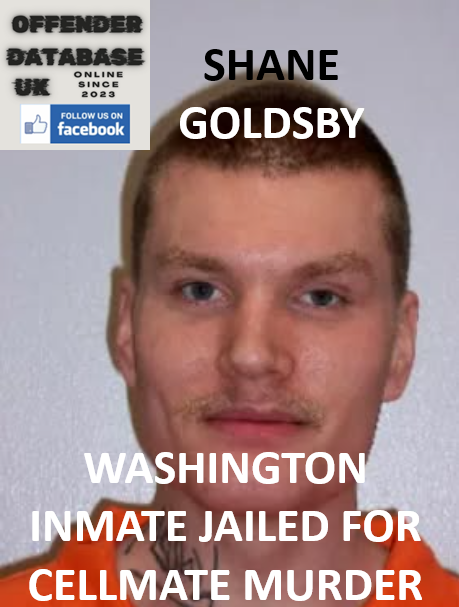
In 2021, a high-profile prison homicide investigation and criminal prosecution resulted in a heavy consecutive sentence for then 26-year-old Shane Goldsby. The case was resolved in court after Goldsby executed a fatal assault on his 70-year-old cellmate, Robert Munger, inside a state detention facility. The prosecution established that Goldsby carried out a brutal series of blows against the older prisoner after discovering Munger was serving a 43-year sentence for child rape, child molestation, and possession of child abuse images involving Goldsby’s own sister.
The investigation showed that Goldsby’s series of behavior culminated on June 2, 2020, at the Airway Heights Corrections Center in Washington, where he was serving time for stealing a police vehicle. Due to differing family last names, prison database administrators failed to notice any connection between the two men when assigning them to the same unit, pod, and cell. While sharing the cell, Munger reportedly detailed his crimes in graphic detail and boasted about explicit media files, creating an impossible and escalating situation. Goldsby claimed he repeatedly requested a cell transfer and pressed his cell’s emergency button to alert guards, but received no response before finally snapping.
SURVEILLANCE FOOTAGE, REVENGE EXCLUSIONS, AND MURDER SENTENCING
The prison framework reported that the fatal attack took place in a communal area of the corrections facility and was fully captured on internal surveillance cameras. The footage recorded Goldsby striking Munger in the face and head approximately 14 times, stomping on his head at least four times, and kicking him before guards took him into custody. Munger died from his injuries, and Goldsby was immediately transferred to a different detention facility to await trial.
Goldsby entered a formal guilty plea to first-degree murder. While he had previously stated in interviews that he had found God and was not actively seeking revenge, the court maintained that his actions constituted an extreme act of violence. At his sentencing hearing, Goldsby became overcome with emotion, and his lawyer read an impact statement offering a deep apology to Munger’s wife and family. The judge handed Goldsby an additional 298 months—almost 25 years—imprisonment for the first-degree murder conviction, to be served consecutively to his existing car theft and trooper injury sentence.
SHANE GOLDSBY – WASHINGTON – CELLMATE HOMICIDE RECORD
Based on Washington State Department of Corrections and court records:
- Legal Status CONVICTED (First-degree murder x1; Existing convictions for vehicle theft and injuring a state trooper).
- Custodial Status JAILED (Sentenced to an additional 298 months, equating to nearly 25 years of immediate high-security prison custody).
- Offence Nature Executed a fatal physical assault against his 70-year-old cellmate, a convicted child rapist, in a prison communal area; struck the victim 14 times, stomped on his head four times, and kicked him; triggered by discovering the cellmate had abused his sister; exposed via internal surveillance footage and guard intervention.
- Timeline of Case Cellmate sharing initiated; Fatal assault executed 2 June 2020; Murder investigation completed; Guilty plea entered; Near 25-year consecutive sentence finalized 2021.
- Location Airway Heights Corrections Center, Washington State, United States.
- Offender Profile Shane Goldsby (then 26, born circa 1994); a high-risk inmate serving time for a high-speed chase and cruiser theft before committing prison homicide.
- Institutional Oversight Investigated by the Department of Corrections and local prosecuting authorities; designated an institutional safety threat.
- Criminal Record Convicted murderer; Law enforcement vehicle thief; High-risk inmate registrant; Jailed registrant; Convicted in 2021.
- Origin Washington State.
LONG TERM SECURE LOCKDOWN AND INSTITUTIONAL ISOLATION
The lengthy sentencing of Goldsby highlights the absolute mandate of corrections frameworks to enforce strict criminal penalties for violence within the secure estate, regardless of the victim’s criminal background. The Department of Corrections acknowledged the placement error as an unfortunate and complicated incident resulting from automated database blind spots. Because of the extreme nature of the violence—specifically the series of physical strikes, head stomps, and the complete bypass of institutional order—Goldsby remains classified under maximum security management filters.
Throughout his consecutive 25-year murder sentence, prison administrators will enforce rigid behavioral controls. Goldsby faces long-term classification within high-security housing units, complete isolation from vulnerable inmate populations, and strict tracking during any external movements. Internal security teams retain full authority to restrict his communal access, enforce mandatory cell checks, and monitor his correspondence. Any further institutional non-compliance, aggressive behavior toward staff or inmates, or violation of security boundaries will trigger immediate internal disciplinary charges, adding further restrictions to his secure confinement.
QUESTION – Given that “the twenty-six-year-old inmate was accidentally locked in a cell with the seventy-year-old predator who raped his sister, endured graphic taunts about the abuse, and snapped when guards ignored his emergency buttons,” do you believe the law should legally mandate that “Prison Authorities Who Negligently Cell a Violent Offender With a Family Victim” must face “Immediate Criminal Charges and Mandatory Prison Sentences” for failing to guarantee absolute institutional safety? Limann matubber sentenced for violent crime raises important questions about the adequacy of prison safety protocols. Furthermore, this case highlights the need for systemic reforms to prevent such tragic incidents from occurring in the future. Lawmakers must consider the implications of neglecting the safety of vulnerable inmates within the correctional system.
For the latest updates and offender details, follow us on the Offender Database UK Facebook Page. If you or anyone you know has been affected by the individuals highlighted on this website, please report them to the Police on 101 (999 in an emergency) or visit their online resources for further details on reporting a crime. You can also report to Crimestoppers if you wish to remain completely anonymous. There is help available on our support links page.