
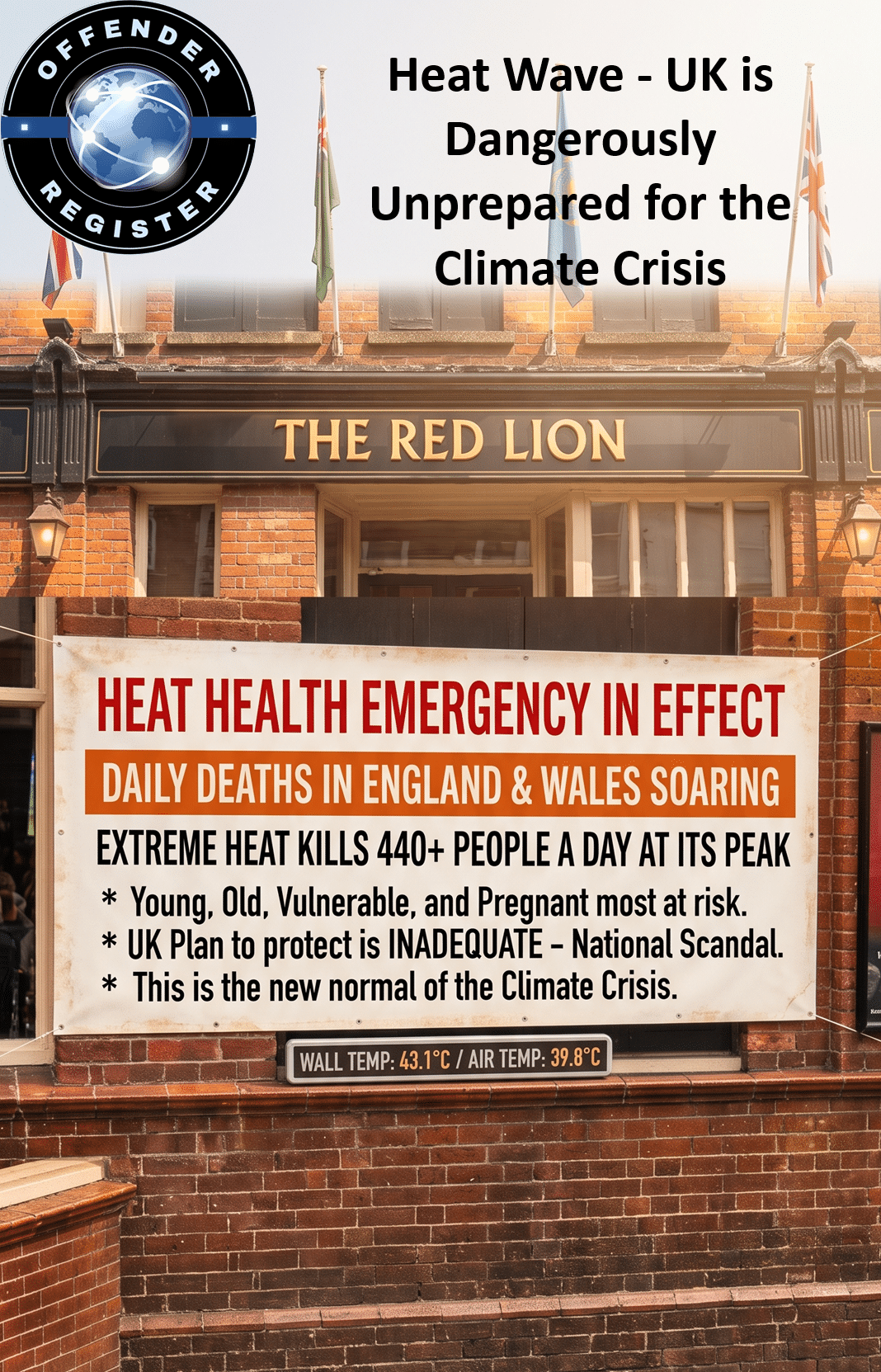
When British summer weather arrives, the national impulse is usually to celebrate. We flock to beer gardens, crowd onto beaches, and bask in the long-awaited sunshine. However, a stark and deeply unsettling report published by The Guardian has laid bare the lethal reality hidden beneath our blue skies. Extreme temperatures are no longer just an inconvenience for commuters or a blessing for holidaymakers; they have transformed into a major, silent public health crisis.
According to a data analysis led by scientists at Imperial College London, the intense heatwave that blanketed England and Wales killed an estimated 440 people a day during its three-day peak. When combined with an earlier spike in May, the total premature death toll across both early-season heatwaves reached roughly 2,700 lives. These are not just abstract statistics; they represent a dramatic, climate-driven surge in excess mortality that is actively catching the UK completely off guard.
Understanding the Supercharged Danger
What makes these numbers particularly terrifying is the definitive link to human-induced global heating. The research indicates that climate change added a staggering 3°C to 4°C to the peaks of these heatwaves.
The Climate Fingerprint: More than 40% of the deaths recorded during the June peak would simply not have happened without the 1.4°C of global heating baked into our atmosphere by decades of fossil fuel burning.
A Scale of Proportion: To put a daily loss of 440 lives into perspective, it vastly outpaces other daily national tragedies. On average, the UK sees roughly four deaths a day from road traffic accidents and around 35 deaths a day tied to alcohol and drug abuse.
The Invisible Burden: The vast majority of these fatalities are classified as “excess deaths”. Extreme heat stresses the human cardiovascular and respiratory systems, triggering fatal heart attacks, strokes, and medical emergencies behind closed doors. Looking strictly at coroner reports listing “heatstroke” as a primary cause only reveals the tip of a much larger iceberg.
A History of Inadequate Infrastructure
The sudden, brutal arrival of back-to-back heatwaves triggered an unprecedented three successive days of red “danger to life” warnings from the Met Office and the UK Health Security Agency. While temperatures soared past 35°C in May and pushed past a record-breaking 37°C in East Anglia during June, the country’s infrastructure buckled. Hospitals were forced to declare critical incidents as cooling machinery and vital IT systems failed under the strain.
Campaigners and advisors have been quick to point out that this is a predictable crisis. For over a decade, the UK’s Climate Change Committee has repeatedly warned that national adaptation plans to protect the population from extreme weather are completely inadequate. Advocacy groups like Friends of the Earth have labelled the current situation a “national scandal,” pointing out that our housing stock, public transport, and healthcare facilities are built to retain heat rather than shed it.
Confronting the New Normal
The chilling reality is that the figures from the first half of summer are already creeping toward the total death tolls seen during the notorious heatwaves. With scientists warning that global temperatures are rising at an accelerated rate, the concept of a “typical British summer” has been permanently shattered.
Addressing this crisis requires a two-pronged strategy: an uncompromising, physics-based transition to net-zero emissions to prevent further warming, combined with an immediate overhaul of our urban environments. Until the UK government stops treating record-breaking summers as brief, exceptional anomalies, vulnerable communities will continue to pay the ultimate price for our collective lack of preparation.
For the latest updates and offender details, follow us on the Offender Register Facebook Page. If you or anyone you know has been affected by the individuals highlighted on this website, please report them to the Police on 101 (999 in an emergency) or visit their online resources for further details on how to report a crime. You can also report to Crimestoppers if you wish to remain completely anonymous. There is help available on our support links page.