
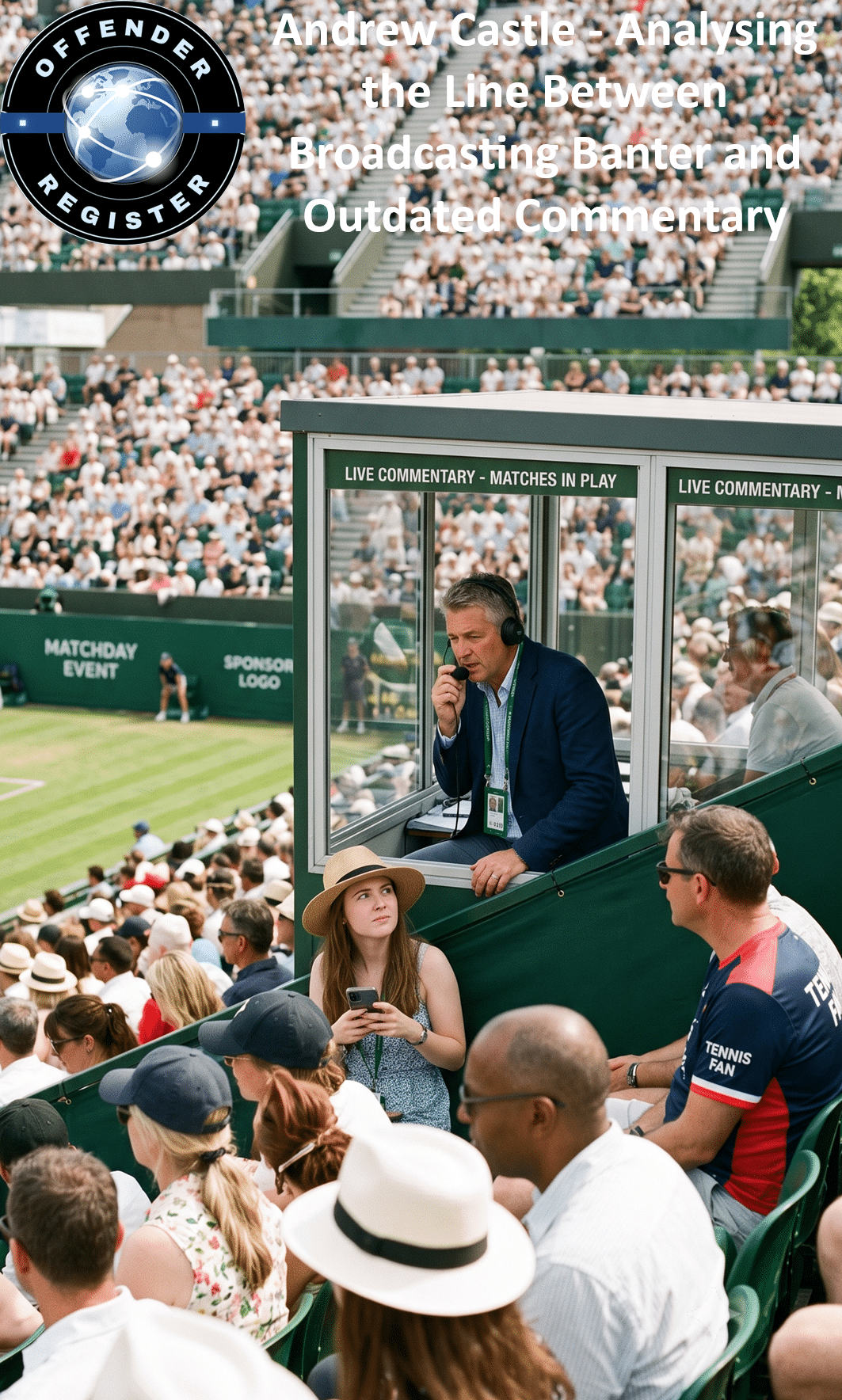
In the high-stakes environment of live sports broadcasting, a commentator’s job is to fill the quiet spaces between the action with colour, context, and narrative. However, when the cameras pan away from the court and into the crowd, the filler commentary can occasionally veer off-script. For veteran BBC tennis commentator and former British number one Andrew Castle, this transition has multiple times landed him in the middle of a raging social media courtside debate.
The central question raised by viewers over the years is simple yet uncomfortable: Are these on-air observations harmless, old-school banter, or do they cross the line into something sexist and lecherous?
The Incidents Under the Microscope
To understand why Castle frequently finds himself trending for all the wrong reasons during the grass-court season, one has to look at the specific moments that triggered public backlash. The most notable flashpoint occurred during Wimbledon in 2016, amidst the fairy-tale run of British underdog Marcus Willis.
As the cameras zeroed in on Willis’s partner in the player box, Castle remarked on air: “It’s a tough life guys, it’s a tough life.” He then proceeded to discuss her appearance rather than the context of the match. The reaction on social media was instantaneous. Viewers immediately labelled the remarks as creepy, unnecessary, and deeply outdated, arguing that a male commentator would rarely fixate on the physical attributes of a male player’s partner in the same manner.
This wasn’t an isolated debate. Over several tournament cycles, audiences have noted a recurring tendency to focus heavily on the women in the stands—whether it’s the beauty of players’ partners, celebrities in the royal box, or spectators enjoying the sunshine.
Sexist, Lecherous, or Just a Bygone Era?
When assessing the criticism aimed at Castle, the internet public generally splits into two distinct camps:
The Modern Critique: Critics argue that this style of commentary reduces accomplished women to mere visual set dressing. In a sport that boasts some of the greatest female athletes in human history, shifting the narrative focus to the aesthetic appeal of women in the crowd feels, to many, inherently sexist. Critics suggest it carries a patronising, “lecherous” undertone that alienates younger, more progressive tennis fans.
The Traditionalist Defence: Defenders argue that the backlash is an overreaction driven by hyper-sensitive online culture. From this perspective, Castle is simply deploying a traditional, light-hearted British broadcasting style—attempting to inject a touch of casual glamour and human interest into long, drawn-out blocks of programming. They argue it lacks malicious intent and is merely a reflection of a commentator trying to mirror the breezy, summer-holiday atmosphere of the tournament.
The core of the issue isn’t necessarily malice; it’s relevance. When a broadcast focuses on a woman’s appearance rather than her presence or the sport itself, it signals a mismatch between traditional broadcasting habits and modern societal standards.
The Evolving Court of Public Opinion
What these recurring controversies truly highlight is the rapid evolution of broadcasting standards. The sports media landscape of the 1980s and 1990s—the era in which Castle cut his teeth as a professional athlete—frequently tolerated, and even encouraged, casual remarks about gender and appearance as part of the “entertainment package.”
In the modern era, however, the microphone captures everything, and the audience acts as an instant, unfiltered focus group. Today’s viewers expect sports coverage to remain professional, egalitarian, and focused on the exceptional athleticism on display.
Whether one views Castle’s commentary style as genuinely objectionable or merely an out-of-touch relic of a bygone era, the result remains the same. The modern sporting audience has made it clear that the focus should remain firmly on the baseline, and that the days of treating the stands like a beauty pageant are firmly in the past.
For the latest updates and offender details, follow us on the Offender Register Facebook Page. If you or anyone you know has been affected by the individuals highlighted on this website, please report them to the Police on 101 (999 in an emergency) or visit their online resources for further details on how to report a crime. You can also report to Crimestoppers if you wish to remain completely anonymous. There is help available on our support links page.