
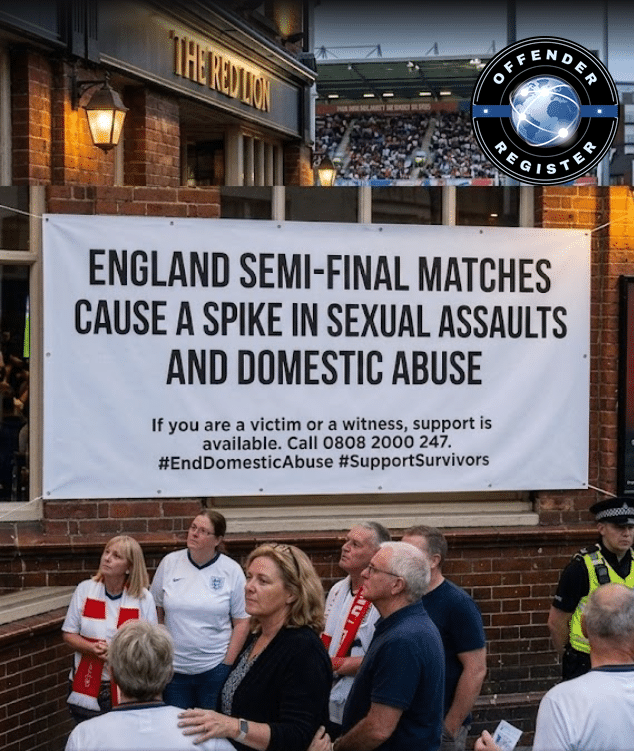
As the nation unites in front of giant screens, beer gardens, and packed venues, major international football tournaments are routinely celebrated as a peak of cultural solidarity. With England having successfully navigated their way through a dramatic tournament run to secure a high-stakes semi-final spot, the atmosphere across the United Kingdom is electric. Yet, beneath the national euphoria lies a well-documented, dark statistical reality that charities and law enforcement agencies brace for during every major knockout game.
Decades of data collected by academic institutions, police forces, and support services reveal a deeply distressing correlation: major England football fixtures do not merely cause tension on the pitch; they act as a dangerous catalyst for surges in domestic abuse and sexual violence across the UK.
The Reality of the Numbers
The relationship between elite football fixtures and regional violence has been extensively studied, with organisations like the National Centre for Domestic Violence (NCDV) and Women’s Aid consistently publicising the findings to warn vulnerable individuals. The statistics paint a stark picture of how the pressure of a major tournament match shifts from a sporting spectacle into a real-world threat:
The Impact of a Defeat: Comprehensive studies show that when England loses an international football match, reported incidents of domestic abuse and violence spike by a staggering 38% compared to baseline days.
The Impact of a Victory: The risk does not vanish when the team succeeds; an England victory still triggers a massive 26% rise in alcohol-related domestic incidents and abuse.
The General Matchday Increase: Regardless of the final scoreline, overall domestic incidents during the 90 minutes of play and for a three-hour window following the final whistle rise by an average of 25%.
The Day After Effect: The volatility carries forward into the subsequent 24 hours, with support services recording an 11% increase in emergency calls the day after a fixture, win or lose.
Shifting the Narrative: Challenging the Excuses
For years, public discourse frequently excused these behavioural spikes by pointing directly to external triggers like match outcomes, tactical frustration, or excessive drinking. However, modern guidance from the Crown Prosecution Service (CPS) and leading advocacy groups has worked heavily to dismantle these myths, shifting accountability entirely back onto the perpetrators.
Football is not the Cause: Major sports tournaments act as an accelerant rather than a root cause. The underlying issue is a pattern of coercive control and toxic anger; a football match simply provides a highly charged environment where existing abusive tendencies escalate.
Alcohol is Not an Excuse: While heavy drinking during summer tournaments frequently lowers inhibitions and increases the severity of physical violence, alcohol intake is an aggravating factor rather than a justification. Millions of people consume alcohol during games without resorting to violence.
The Choice to Abuse: Abuse remains a deliberate choice made by the perpetrator. Advocacy groups emphasise that when an individual targets their partner behind closed doors while maintaining perfectly civil behaviour in public spaces or around friends at the pub, it demonstrates a conscious choice of control.
Key Support Systems and Resources
As the country prepares for the upcoming semi-final clash, emergency services and local authorities have launched co-ordinated campaigns—such as the Hampshire Domestic Abuse Partnership’s “When is kick-off at your place?” initiative—to ensure support is highly visible.
National Domestic Abuse Helpline: A free, confidential 24-hour service providing essential guidance and crisis support across the UK (Call: 0808 2000 247).
Women’s Aid and Refuge: National charities offering comprehensive digital support networks, live chat options, and emergency housing solutions for women and any affected child.
Police Safeguarding Initiatives: UK police forces have deployed specialised domestic abuse response teams on matchdays, utilising an evidence-led prosecution strategy that relies on body-worn video footage to secure convictions even if a traumatised victim feels unable to give evidence in court.
Confronting the Legacy
The conversation surrounding sexual offences and football has been further amplified during recent tournament cycles due to high-profile controversies on the pitch, including legal challenges and stadium snubs involving international players facing active rape allegations in the UK courts. This intersection of elite sport and sexual violence has forced fans and media commentators to look closer at the culture surrounding the game.
The true victory for the country cannot merely be measured by trophies or successful penalty shootouts. As public campaigns increasingly urge communities to “show domestic abuse the red card,” the focus is turning toward ensuring that no woman or child is forced to live in fear of the final whistle. Enjoying the beautiful game should never come at the cost of human safety.
For the latest updates and offender details, follow us on the Offender Register Facebook Page. If you or anyone you know has been affected by the individuals highlighted on this website, please report them to the Police on 101 (999 in an emergency) or visit their online resources for further details on how to report a crime. You can also report to Crimestoppers if you wish to remain completely anonymous. There is help available on our support links page.