
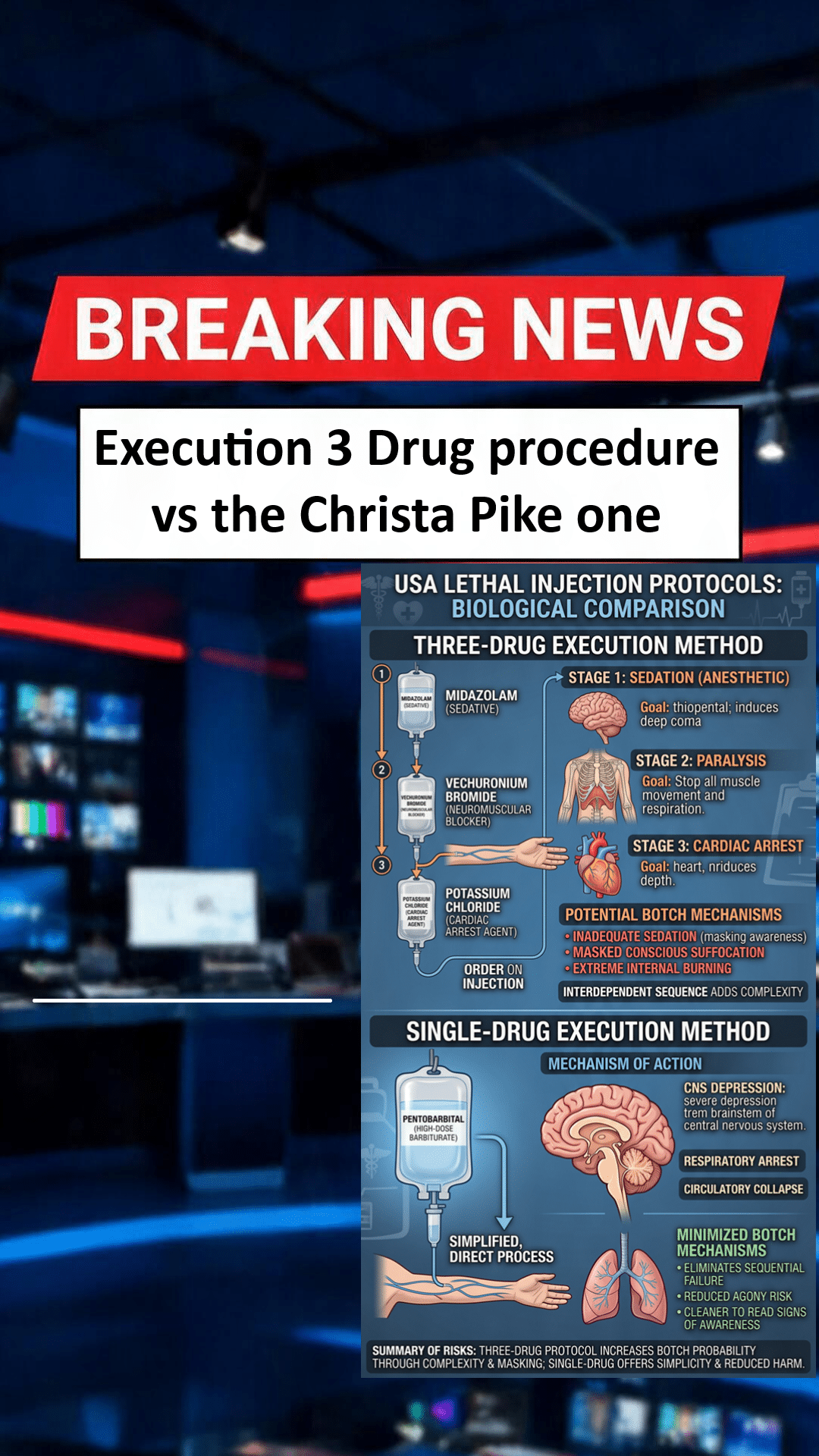
When lethal injections go horrifically wrong, the blame almost always traces back to one critical design flaw: the three-drug cocktail versus the single-drug method.
The traditional three-drug protocol relies on a sedative, a paralytic, and potassium chloride to stop the heart, with the paralytic serving as a chemical veil that masks conscious suffocation and extreme burning if the sedative fails.
Because this system depends on non-medical prison staff executing sequential flushes with absolute precision, any error in timing or dosage triggers catastrophic botches—leading to prolonged writhing, audible gasping, and severe trauma for witnesses observing a failed execution.
In contrast, the single-drug protocol administers an overwhelming overdose of a single barbiturate like pentobarbital.
By eliminating multiple sequential chemicals, the state strips away the agonising burn of potassium and the terror of chemical paralysis, significantly lowering the frequency of visible, violent failures.
While neither approach solves the persistent challenge of damaged veins and difficult IV access, the evidence remains clear: multi-drug cocktails introduce far more failure points, making them drastically more prone to gruesome botches than a single sedative protocol.
For the latest updates and offender details, follow us on the Offender Register Facebook Page. If you or anyone you know has been affected by the individuals highlighted on this website, please report them to the Police on 101 (999 in an emergency) or visit their online resources for further details on how to report a crime. You can also report to Crimestoppers if you wish to remain completely anonymous. There is help available on our support links page.