
If you think modern reality television has a monopoly on chaotic love triangles, hidden cameras, and strategic infidelities, you haven’t been paying attention to 18th-century opera. Long before the era of streaming services, Wolfgang Amadeus Mozart and his brilliant librettist Lorenzo Da Ponte unleashed The Marriage of Figaro (Le nozze di Figaro) upon the world in 1786. On the surface, it is a sparkling drawing-room comedy about a couple trying to get down the aisle. Beneath the lace cuffs and powdered wigs, however, lies an incredibly sharp, politically charged exploration of sexual desire, power dynamics, and human intimacy.
At its core, Figaro is an opera entirely driven by libido. It is a story where every single character is motivated by the pursuit of pleasure, the frustration of denial, or the strategic weaponisation of attraction.
The Battle for the Bedroom
The narrative tension of the entire opera hinges on a singular, archaic sexual threat: the jus primae noctis, or the “Right of the First Night”. The plot kicks off because Count Almaviva has his sights set on Susanna, the clever maid who is about to marry his valet, Figaro. The Count wants to revive this old feudal right, which would allow him to sleep with Susanna before her wedding night.
What follows is not a tragedy, but a highly sophisticated game of cat and mouse. The opera shifts the traditional power balance entirely:
The Aristocratic Appetite: Count Almaviva represents unchecked privilege, using his societal status to hunt for sexual conquests within his own household.
The Subversive Subordinates: Figaro and Susanna use their wit, intellect, and physical proximity to outmanoeuvre the Count, transforming the bedroom into a political battleground where the working class holds all the cards.
The Vengeful Countess: Rosina, the neglected Countess, teams up with the servants, choosing to reclaim her dignity not through quiet despair, but by participating in a complex web of nocturnal trickery and disguised identities.
Hormones in High Definition
While the main plot focuses on the power struggle between the Count and Figaro, Mozart introduces the ultimate embodiment of raw, adolescent desire in the character of Cherubino. The teenage pageboy is a walking hormonal firestorm, famously falling in love with every single woman he looks at—most notably the Countess herself.
Cherubino’s signature aria, “Non so più cosa son, cosa faccio” (“I no longer know what I am or what I am doing”), is perhaps the most accurate musical depiction of adolescent infatuation ever composed. The music pants, rushes, and hesitates, perfectly capturing the dizzying, overwhelming sensation of a young person completely consumed by new physical desires. By casting Cherubino as a pants role—a male character traditionally sung by a mezzo-soprano—Mozart adds a brilliant layer of fluid sensuality, making the character’s backstage bedroom escapades even more provocative.
The Midnight Rendezvous
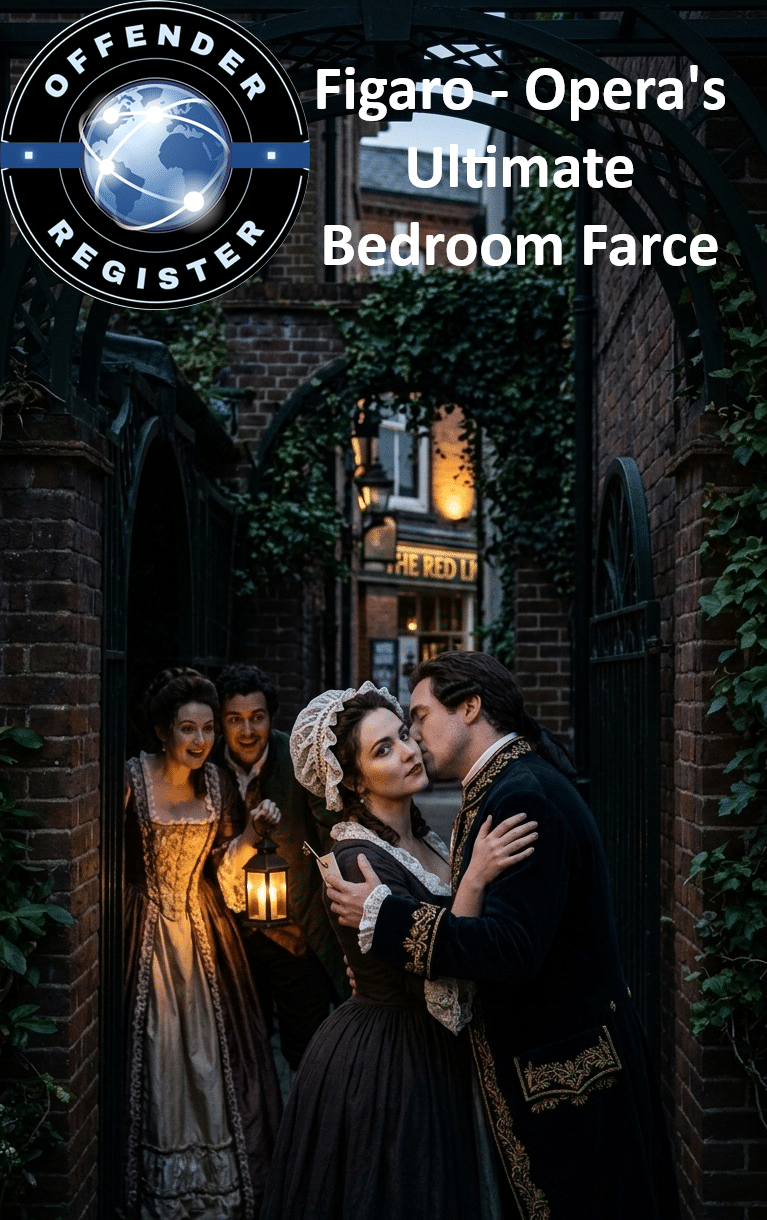
Everything culminates in the fourth act, set in a darkened, labyrinthine garden. In a classic Shakespearean twist, the Countess and Susanna swap clothes to trap the Count in his own infidelity. In the dark, the boundaries of class, status, and marriage dissolve completely, leaving only the raw mechanics of attraction and deception.
When the Count passionately woos his own wife, believing her to be Susanna, the opera delivers its ultimate punchline on the blindness of pure lust. It is a scene that manages to be simultaneously hilarious, deeply cynical, and profoundly moving.
When the lights are finally brought up and the deceptions are revealed, The Marriage of Figaro transcends its farcical roots. It leaves the audience with a stark, enduring truth: sex and desire can break kingdoms and upend households, but survival ultimately requires a healthy dose of wit, mutual forgiveness, and a profound understanding of human nature.
For the latest updates and offender details, follow us on the Offender Register Facebook Page. If you or anyone you know has been affected by the individuals highlighted on this website, please report them to the Police on 101 (999 in an emergency) or visit their online resources for further details on how to report a crime. You can also report to Crimestoppers if you wish to remain completely anonymous. There is help available on our support links page.