
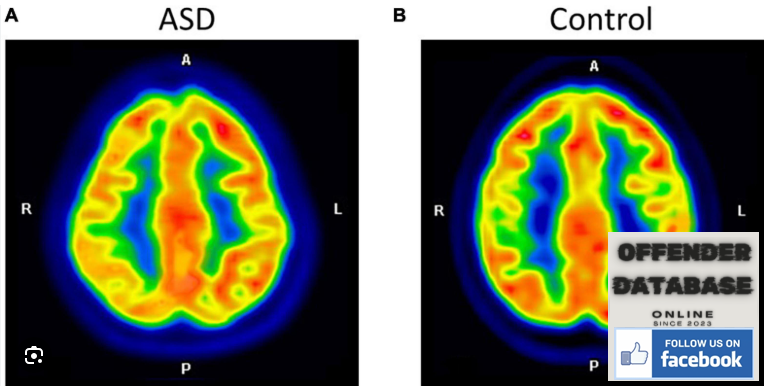
Key Structural Differences in the ASD Brain
1. Larger Brain Volume in Early Childhood
- Many children with ASD show increased total brain volume in early development, particularly in the frontal and temporal lobes.
- This early brain overgrowth may contribute to sensory processing differences and cognitive variations.
📖 Study: Courchesne et al., JAMA Neurology (2011)
🔹 Title: Early brain overgrowth in autism
🔹 Findings: MRI scans showed that 2 to 4-year-old autistic children had larger brains than neurotypical peers, particularly in the prefrontal cortex.
📖 Link: https://doi.org/10.1001/archneurol.2010.123
2. Differences in the Corpus Callosum
- The corpus callosum, which connects the left and right brain hemispheres, is often smaller or has altered connectivity in autism.
- This may contribute to difficulties in integrating information across different brain regions.
📖 Study: Wolff et al., Biological Psychiatry (2012)
🔹 Findings: Infants later diagnosed with ASD had a thinner corpus callosum, affecting cross-hemisphere communication.
📖 Link: https://doi.org/10.1016/j.biopsych.2011.08.042
3. Changes in the Amygdala (Emotion Processing)
- The amygdala, responsible for emotion regulation and social processing, is often enlarged in childhood but later becomes smaller in adulthood in ASD.
- This may explain differences in social-emotional processing and anxiety regulation.
📖 Study: Nordahl et al., Biological Psychiatry (2012)
🔹 Findings: Young autistic children had larger amygdalas than neurotypical children, but this difference faded in adulthood.
📖 Link: https://doi.org/10.1016/j.biopsych.2012.06.021
4. Altered White Matter Connectivity
- White matter is crucial for transmitting signals between different brain regions.
- In ASD, white matter connectivity is often disrupted or excessive, affecting how different brain areas communicate.
📖 Study: Travers et al., Brain Connectivity (2012)
🔹 Findings: ASD individuals had higher or altered white matter connections, particularly in sensory and motor pathways.
📖 Link: https://doi.org/10.1089/brain.2012.0108
5. Differences in the Prefrontal Cortex
- The prefrontal cortex (PFC), responsible for social reasoning, decision-making, and executive function, develops differently in ASD.
- Some studies show an increase in synaptic density in this area, leading to difficulty filtering sensory input.
📖 Study: Stoner et al., New England Journal of Medicine (NEJM) (2014)
🔹 Findings: Autistic individuals had disorganized prefrontal cortex layers during brain development.
📖 Link: https://doi.org/10.1056/NEJMoa1307491
Functional Brain Differences in ASD
1. Differences in the Default Mode Network (DMN)
- The DMN (responsible for self-reflection and social thinking) is less active in ASD.
- This may explain why social interactions feel less intuitive for autistic individuals.
📖 Study: Kennedy & Courchesne, PNAS (2008)
🔹 Findings: fMRI scans showed reduced DMN activity in ASD, making social cognition more effortful.
📖 Link: https://doi.org/10.1073/pnas.0803081105
2. Hyperconnectivity in Sensory Areas
- Autistic brains often have increased connectivity in sensory processing areas (vision, sound, touch).
- This can explain sensory sensitivities commonly reported in ASD.
📖 Study: Uddin et al., NeuroImage (2013)
🔹 Findings: ASD individuals had excessive connectivity in sensory regions, leading to heightened sensory perception.
📖 Link: https://doi.org/10.1016/j.neuroimage.2013.06.078
Summary of Findings
✅ Larger early brain volume but later normalization
✅ Differences in corpus callosum affecting communication between hemispheres
✅ Amygdala alterations affecting social-emotional processing
✅ White matter connectivity differences affecting sensory and motor integration
✅ Reduced default mode network (DMN) activity, leading to social processing differences
✅ Hyperconnectivity in sensory processing areas, explaining sensory sensitivities
Summary
Scientific evidence confirms that autism is a neurodevelopmental condition with distinct structural and functional brain differences. It is not just a behavioural disorder—it has a clear basis in brain development.
If you or anyone you know have been affected by the people highlighted in this article, then please report those individuals to the Police on 101 (999 if an emergency) or visit their online resources for further details of the options for reporting a crime. You can also make a report at Crimestoppers should you wish to be completely anonymous. There is help available on our support links page.